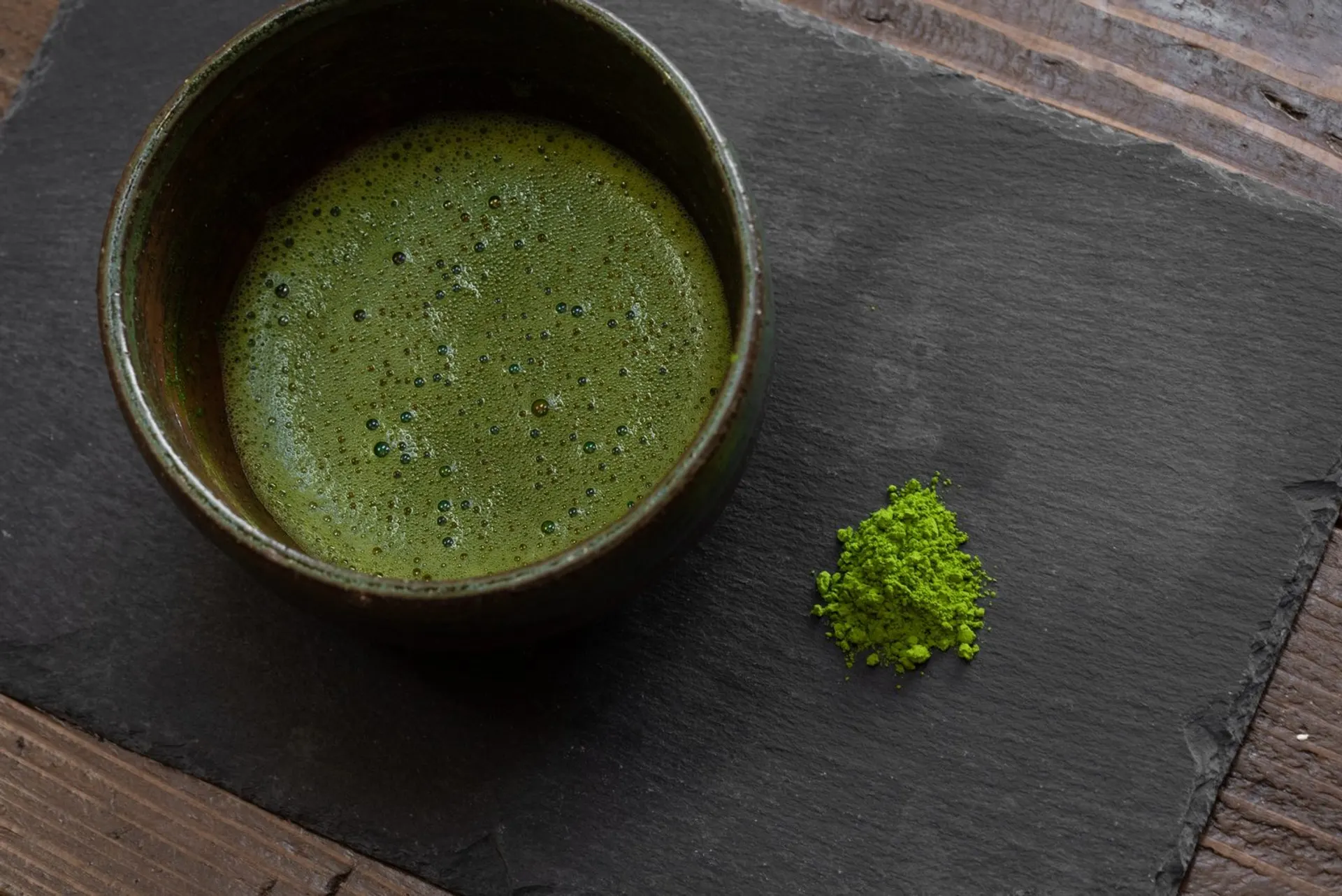
About Matcha
Now that the world knows matcha, we want to speak about what authentic matcha truly is.
Our Matcha
No food is harder to fake than matcha. Leaves picked in the field are steamed, dried, selected, and ground — that is all it is. The quality of the field becomes, directly, the taste of the bowl. And as matcha has spread across the world, so has “matcha” of every origin and every grade.
we protect and deliver the authentic taste.
Matcha fundamentals
Matcha is made from tencha — shade-grown tea leaves that are steamed and dried. Shading suppresses astringency, increases the umami compound theanine, and gives rise to the refined fragrance called ooika, the “covered aroma”. Ground on a stone mill, tencha becomes particles a few microns across — the source of that famously smooth texture.
The secret balance — breaking “delicious” into seven elements
The deliciousness of a bowl of matcha is born of seven elements in delicate harmony. We call this the secret balance, and we judge every matcha by this measure.
Colour
A vivid, deep jade green — a brilliant tone with the vigour of young shoots.
Aroma
The fresh, refined “covered aroma” (ooika), reminiscent of nori and young grass.
Umami
Mellow, deep umami from theanine — a rich body akin to dashi.
Sweetness
A natural, rounded sweetness hidden within the bitterness, lingering in the finish.
Bitterness & astringency
Clean and refined — just enough to give the whole its structure.
Texture
The fine, silky feel on the tongue that only stone milling can give.
Finish
A pleasant resonance of aroma and umami that stays long after the last sip.
A clarity from which every impurity has been driven out. And the delicacy of Kyoto's four seasons, expressed through fine adjustments to season and climate.
Designed by use — no two matcha are the same
Koicha (tea ceremony, formal)
The finest hand-picked tencha. Bitterness reduced to the limit; rich umami, sweetness, and a mellow fragrance — designed down to the lustre and viscosity when kneaded. Stone-milled.
Usucha (whisked, everyday)
Umami and bitterness in harmony. Whisks to a fine foam; a clean finish with real body.
For lattes
Designed so that colour and aroma rise precisely when milk is added — vivid green and rich covered aroma that stand up to the body of milk.
For cooking & confectionery
Colour and aroma strong enough to survive heat, sugar, and fats.
Everyday (casual, cold brew)
A light, refreshing profile for daily life — easy to brew even in cold water.