About Japanese Tea
Sencha, gyokuro, matcha, hojicha — all are born from the leaves of the same tea plant.
The tea called green tea
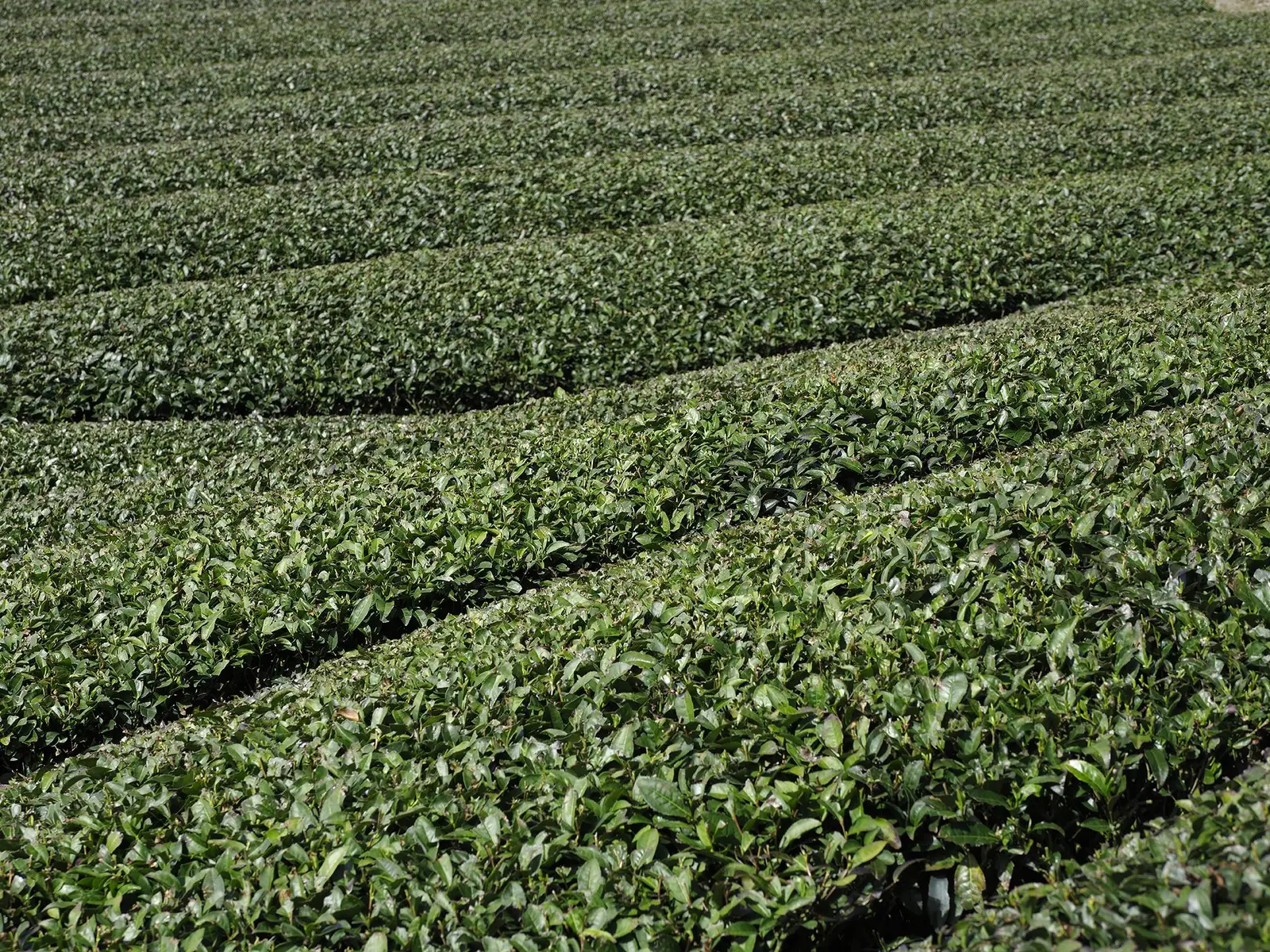
Green tea is an unfermented tea: the picked leaves are steamed at once to halt oxidation. Let the same leaves oxidise and they become oolong, then black tea. What defines Japanese green tea begins in the field. The umami of tea comes from the amino acid theanine, which sunlight gradually converts into catechins — the source of astringency. Shading the plants slows this change, yielding leaves rich in umami and low in astringency.
Sencha — a fresh cup raised in full sun
Grown unshaded in full sunlight, sencha is Japan's most produced tea. Fresh leaves are steamed the day they are picked, then rolled and dried in successive stages until they take their needle-like form. From 100 kg of fresh leaf comes roughly 23 kg of crude tea.
70–90°C for 30 seconds to 1 minute. Cooler water draws out mellow umami; hotter water sharpens astringency and aroma.
Gyokuro & kabusecha — umami raised in the shade
In gyokuro fields, the leaves grow for about 20 days under covers that block the light, from the moment the new shoots appear. Kabusecha is shaded for only about a week before picking — a tea between gyokuro and sencha. The longer the shading, the softer the astringency and the deeper the umami.
Gyokuro: around 50°C for 1.5–2 minutes, a small amount savoured slowly. Kabusecha is sweet at low temperatures, crisp like sencha when brewed hot.
Tencha and matcha — ground, not rolled
Tencha is made from leaves shaded like gyokuro, steamed and then dried without rolling, with stems and veins removed. Ground slowly on a stone mill, it becomes matcha. Skipping the rolling stage is the key difference from sencha.
About matchaHojicha & genmaicha — the pleasure of roastiness
Hojicha is sencha or bancha roasted over high heat to draw out its toastiness. Roasting drives off astringency and bitterness, leaving a light, easy cup. Genmaicha blends roasted brown rice with tea leaves in roughly equal measure.
Both: boiling water, briefly — about 30 seconds. Teas enjoyed for aroma are best brewed hot.
Kyobancha — the everyday tea of Kyoto
Kyobancha is made from the mature leaves cut when tea fields are trimmed after the spring harvest. In the traditional way, the large leaves are steamed and dried in the sun without rolling, giving a distinctive smoky, roasted aroma. We too have a history of reviving kyobancha for the present day through old-style roasting.
Storing your tea
Five things degrade the flavour of tea: humidity, oxygen, light, heat, and absorbed odours. Unopened, keep it in a cool dark place or the refrigerator (let chilled tea return to room temperature before opening, or condensation will dampen it). Once opened, transfer to an airtight tin and finish within two weeks to a month.